
Heating systems in a private house
-1147x627.jpg "Hajster-4")
What are the types of heating in a private house?
A comfortable climate in your home consists of several important factors, such as air and surface temperature, air quality, and relative humidity. Heating is one of the key factors that determines the level of coziness and health at home, providing a comfortable indoor temperature. Today, we will analyze the most popular types of home heating, from gas boilers to heat pumps, and help you choose the best heating system for your needs and requirements.
Gas boilers
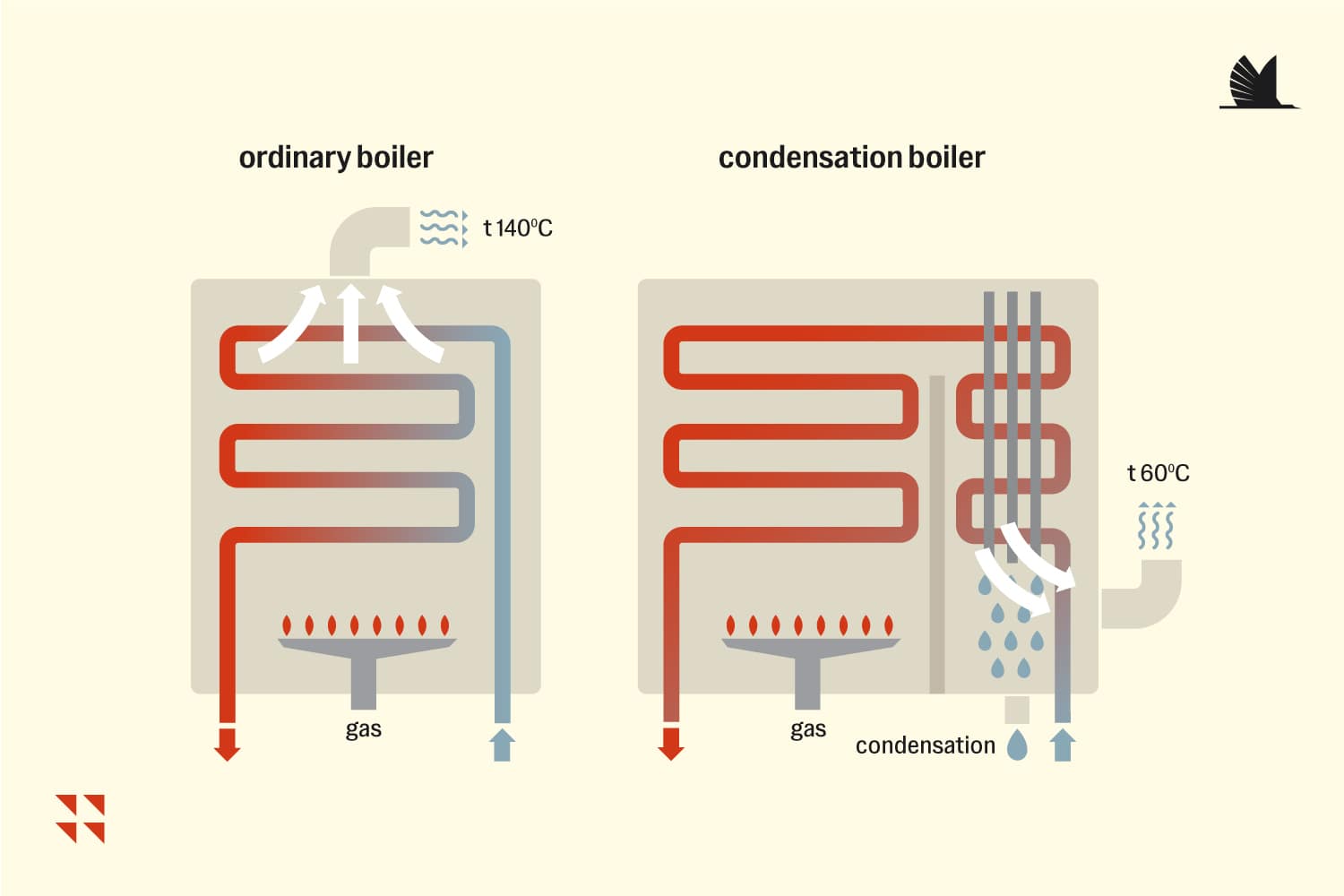
At the moment, gas boilers remain one of the most common options for heating buildings. A gas boiler is a device that burns gas to generate heat, which is then used to heat the house and prepare hot water.
The principle of operation of a gas boiler is quite simple. Gas is supplied to the boiler, where, thanks to the gas burner, it burns and further heats the heat exchanger through which the heating medium circulates. Heated water or, if necessary, non-freezing solution is supplied to the heating system: radiators or underfloor heating, which in turn heat the room. Today, classical gas boilers have been replaced by condensing boilers, which, in addition to the heat generated by gas combustion, additionally utilize the heat generated by flue gas condensation.
We tell more about gas boilers in the article "What is a condensing boiler?".
It should also be noted that the condensing type of boilers has approximately 20% higher efficiency compared to conventional devices, and thus the efficiency of such a device can reach 111%.
Other advantages of gas boilers include their fairly compact design and the ability to quickly modulate their power and coolant temperature.
The main disadvantage of gas boilers is, of course, the use of gas. Methane is a fossil fuel that has a negative impact on the climate situation and global temperature rise. And natural gas combustion products contain a number of toxic compounds that are harmful to us and the environment.
It should also be noted that gas deposits are still limited and the cost of this fuel will increase every day. Gas has already become a means of political and economic influence. Today, the price of gas is constantly rising and is almost unpredictable. In Ukraine, the existing gas tariff for households is artificially restrained by subsidies. Although strategically, the state should subsidize the development of green technologies. It should be remembered that the transition from fossil fuels to renewable energy technologies will take a long time, probably several decades. Therefore, we should have started the transition from fossil fuels several years ago to ensure our energy security in the future.
If you are considering installing a gas boiler, it is also important to remember that gas equipment is a device with increased safety requirements. After all, gas can reach explosive concentrations in the event of a leak, and its combustion products (carbon monoxide) can be fatal if inhaled.
Electric boilers
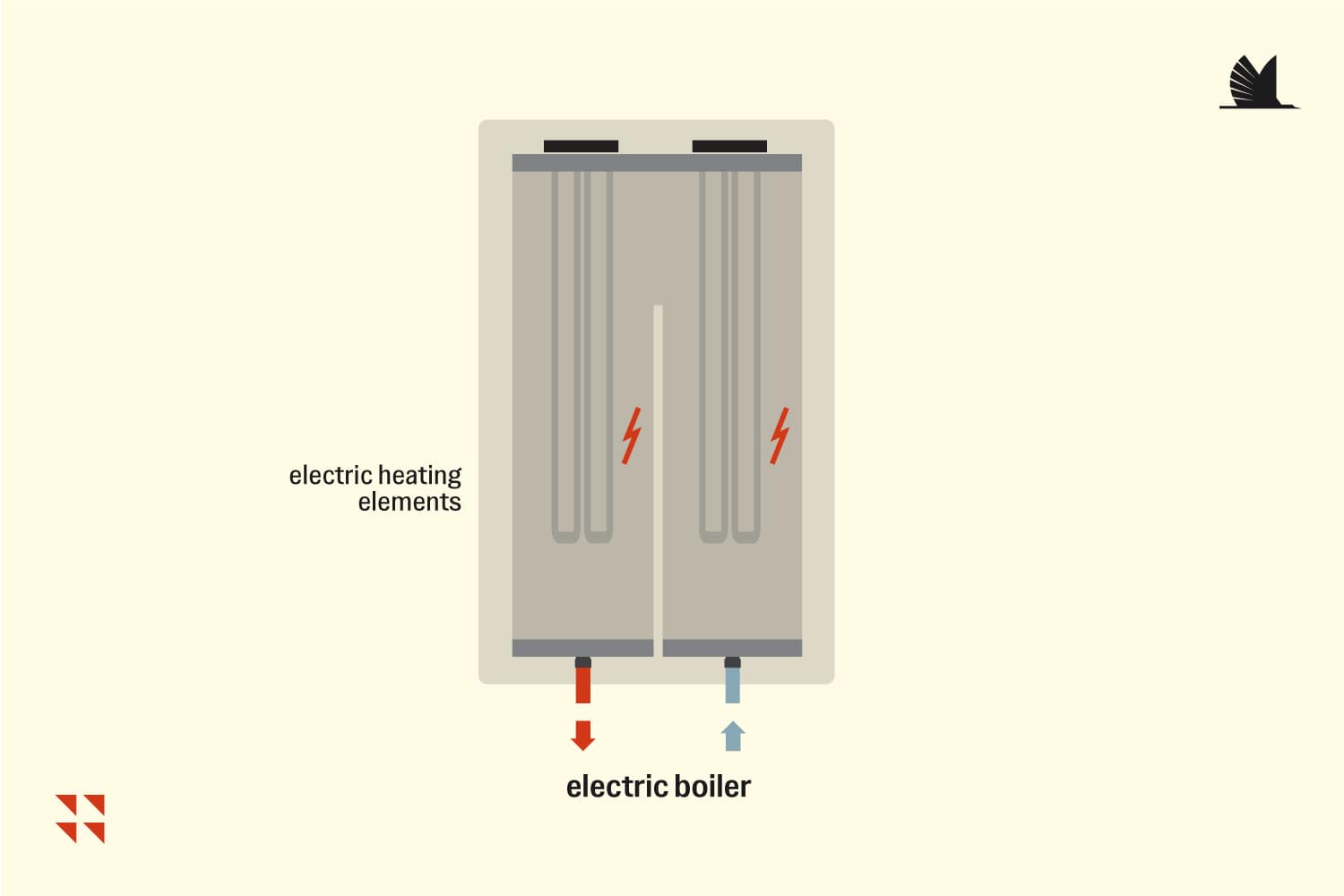
An electric boiler is a heat generator that uses direct electric heating for heating.
The principle of operation of an electric boiler is quite simple. Electric current is supplied to the heating element (heating elements), which is placed in the heat exchanger where the heat carrier is heated, which circulates in the heating system. The heated water is supplied to the room heating system through a circulation pump.
Heating occurs with virtually no energy loss - 1 kW of electricity generates 0.99 kW of heat.
A home heating system using an electric boiler is a rational solution when there is no gas supply to the house on the site. The advantages of electric boilers include their ease of installation and operation, as well as the absence of the need to remove combustion products. However, it is important to take into account the cost of electricity, as heating with an electric boiler will have some of the highest operating costs.
Compared to gas heating, electric boilers don't require a gas connection, which makes them a convenient option for homes without a gas network. Compared to electric boilers, gas heating systems are usually more efficient and economical. Today, the cost of 1 kWh of heat produced by an electric boiler is higher than that of a gas boiler.
Also, electric boilers may be less environmentally friendly, as the use of large amounts of electricity can lead to increased carbon dioxide emissions during electricity production, which unfortunately is often produced by burning fossil fuels such as coal or gas.
All heating systems have their advantages and limitations, and the best heating system for a building will depend on the specific conditions and needs of the occupants.
Solid fuel boilers
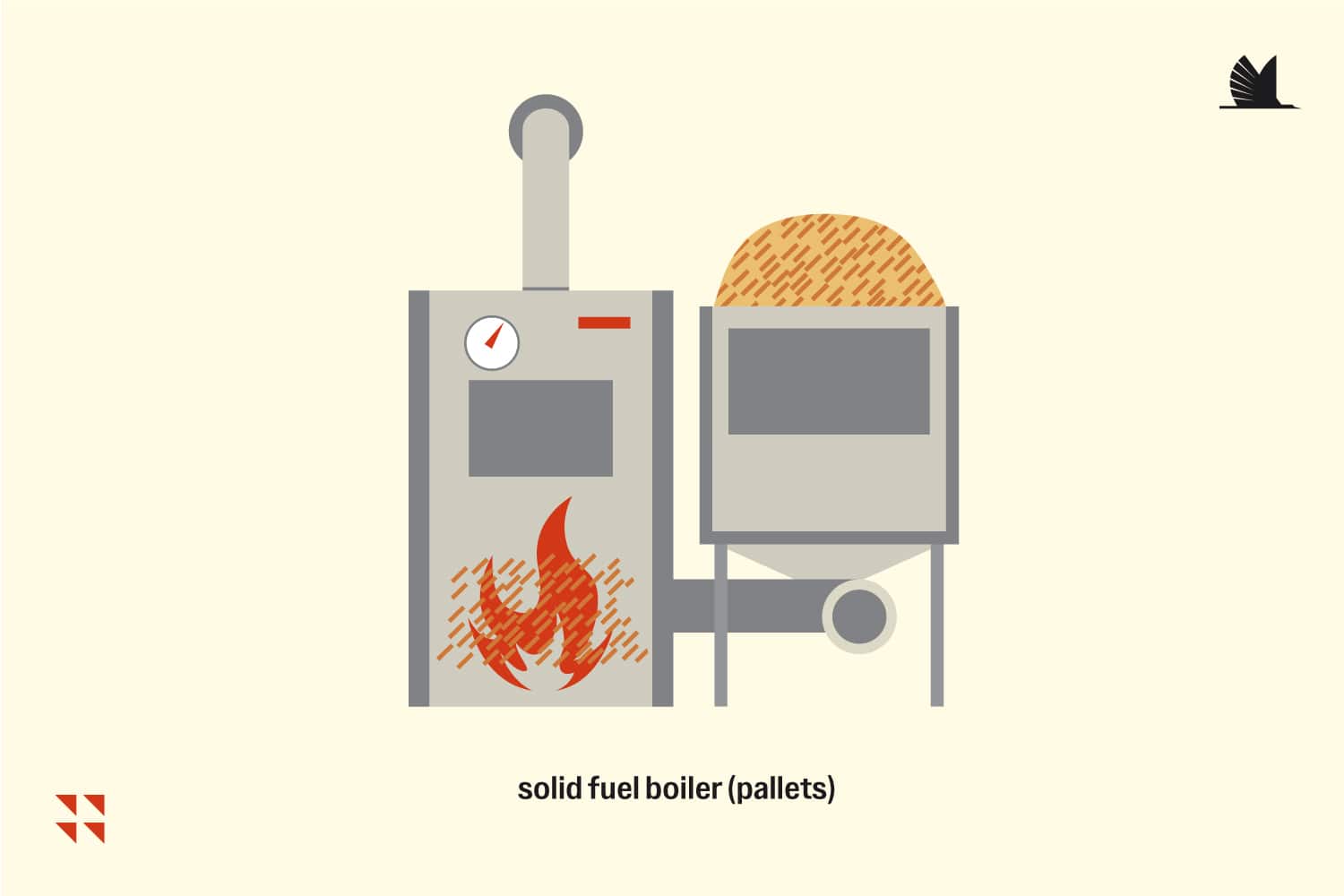
Solid fuel boilers for heating private houses are a good choice when it comes to maximum independence from electricity or gas. They are especially effective in places where there are available sources of solid fuel.
Among the advantages of solid fuel boilers are independence from gas and electricity prices; the ability to use different types of solid fuel, which makes them more affordable than boilers that run on one type of fuel; and high heat output when used properly. In general, this heating system is attractive for heating premises that have certain limitations on the power of the incoming power grid and do not have the possibility of a gas pipeline.
The disadvantages of solid fuel boilers include the requirements for regular careful maintenance: fuel must be added to the hopper regularly, and the boiler itself must be cleaned of soot and other combustion products. They can be more expensive to operate than boilers that run on natural gas. Solid fuel boilers can emit more harmful emissions than boilers that run on natural gas or propane. You should also keep in mind the dispersion of smoke and unpleasant odors, so you need to pay attention to a high-quality smoke exhaust system in the house. The quality of the fuel is crucial for the efficient use of solid fuel boilers: firewood must be dry and wood pellets must meet certain standards.
Compared to gas heating, solid fuel boilers can be less convenient to operate and require more maintenance. Compared to electric boilers, they may be less efficient in heat output. The choice of a solid fuel boiler for heating a private house depends on your needs, fuel availability, and maintenance capabilities.
Heat pump
A heat pump is a smart device that combines three functions - heating, cooling, and hot water supply - using energy from renewable sources.
The principle of operation of a heat pump is to obtain energy from the environment - air, soil, or water - through a physical process known as the thermodynamic Carnot cycle, which takes place in a closed system and can be carried out in both forward and reverse directions. Accordingly, a heat pump system based on the Carnot cycle can combine two functions and work both for heating and cooling. Depending on the type of heat pump, most of the energy, about 80%, is obtained from renewable energy sources, for example, by extracting low-potential heat from the ambient air, and the remaining 20% is the electrical operation of the compressor, which is the heart of the system.
In the case of an air source heat pump, we will have an external module consisting of a heat exchanger and a fan, which will absorb energy from the environment. If we are talking about a geothermal heat pump, the energy will be extracted from the geothermal field. It can, for example, be ground probes drilled to a depth of 40 to 120 meters or a horizontal pipeline system placed at a depth of 1.8m-2m. In fact, there are many combinations and types of geothermal systems and their configuration depends on the existing conditions, the availability of a particular energy source, and the size of the system itself.
A heat pump is an efficient and very cost-effective heating system, as it can save up to 80% of heating costs compared to traditional heating systems such as gas boilers or electric boilers. However, in some cases, heat pumps can be more expensive to install. But in any case, the payback period for heat pumps will be quite reasonable.
Heat pumps can be tailored to any environmental conditions and project requirements to ensure the highest efficiency. To choose the best heating system for a private house, it is worth considering all types of heat pumps: water-to-water, ground-to-water, and air-to-water. You can learn more about them in the article "Efficiency of heat pumps" prepared by Hajster.
Along with unsurpassed energy efficiency and cost reduction, heat pumps demonstrate a high level of environmental friendliness, as the operation of heat pump equipment is not accompanied by any harmful emissions. An important advantage of heat pumps is the usual long service life of such systems, as well as their minimal maintenance requirements. In general, a heat pump is a universal solution - this technology is suitable for both heating and hot water supply, as well as for cooling the premises.
The downside of heat pumps is the high cost of installation - they can be more expensive than other heating systems at the initial stage. Depending on the climate, some heat pump models may have a reduced level of efficiency at low temperatures. Also, an improperly selected or installed heat pump may be less efficient, so you need to be careful about proper installation and maintenance.
-min.jpg "Hajster-8")
What type of heating is better for a private house?
Now that we've looked at the most popular types of heating systems, let's organize all this information in a comfortable table.
-min.jpg "Hajster-9")
According to the table, a heat pump is the most efficient, economical, and safe way to heat a house. It can reduce heating costs by up to 80% compared to traditional systems such as gas boilers or electric boilers. However, it should be borne in mind that heat pumps also require higher installation costs, which are later recouped.
Gas boilers are more affordable than heat pumps but less efficient and less economical. The use of gas-condensing boilers can reduce heating costs by up to 30%. They are easier to maintain than electric and solid fuel boilers. However, gas boilers have the highest level of danger of the listed heating options. Also, gas equipment requires regular and substantial maintenance.
An electric boiler is convenient to install, especially when there is no way to connect the house to the gas network. However, this type of heating is one of the most expensive in terms of operating costs. It is safe for the building and does not require complex maintenance.
Solid fuel boilers are an excellent choice for heating houses that are not connected to a gas pipeline and have certain limitations on the power of the electrical connection. They provide an opportunity to avoid dependence on gas and electricity prices, as well as to use a variety of solid fuels. It is worth remembering that such boilers require close attention and care: constant addition of fuel, cleaning of the system and chimney from soot, and regular maintenance. It is also very important to control the quality of the fuel used.
So, if you're thinking about what kind of heating is best for your home, you should start by considering the characteristics of your building, your financial capabilities, and your personal needs. If you're looking for efficient, cost-effective, and safe heating, a heat pump can be a great option for your home. Consult with a Hajster specialist to analyze your project and choose the best heating solution for your home.


-1147x627.jpg "Hajster-12")