
Performance analysis of heat pumps

Heat pumps are currently the most popular heating and cooling equipment in Europe. Thanks to European subsidy programs, a significant share of heat pump sales is not only in new construction but also in renovations. Heat pumps are now being massively integrated into heating systems for buildings of all types, from private homes to large facilities. This is essential both for the country to reduce dependence on fossil fuels and cut CO2 emissions, and for building owners to save up to 80% of energy on heating and avoid the possibility of a gas explosion in their homes. According to the forecasts of the analytical center Agora Energiewende and the German Industry Federation (BDI), the demand for heat pumps will grow to 14 million devices, with air-source heat pumps accounting for 90% of this amount. Therefore, the issue of heat pump efficiency is highly relevant.
The integration of heat pumps into heating systems has been the subject of analysis and research by the Fraunhofer ISE Institute for more than 12 years as part of the "WPsmart im Bestand" project. The goal of this project is to improve the functionality and efficiency of the integration of heat pumps into heating systems. The latest study, which analyzed more than 15 heating systems based on air-to-water heat pumps and 12 systems based on brine-water geothermal heat pumps, shows that heat pumps can be a viable option for renovating older homes. The study found that heat pumps can provide significant energy savings, even in older homes with poor insulation. The average annual productivity factor (SCOP) for the air-to-water heat pumps was 3.5, and the average SCOP for the brine-water geothermal heat pumps was 4.2. This means that the heat pumps were able to provide three to four times more energy than they consumed.
The researchers emphasize that all the houses studied are more than 20 years old, i.e., they are classified as renovated and have a diverse energy status with a variety of different heating surfaces, such as underfloor heating, convectors, and radiators. The study also found that heat pumps can be used to provide both heating and cooling, which can further reduce energy consumption. In addition, heat pumps can be used to provide hot water, which can eliminate the need for a separate water heater.
The study's findings suggest that heat pumps can be a promising option for renovating older homes. Heat pumps can provide significant energy savings, and they can also provide both heating and cooling. As a result, heat pumps can help homeowners reduce their energy bills and their carbon footprint.
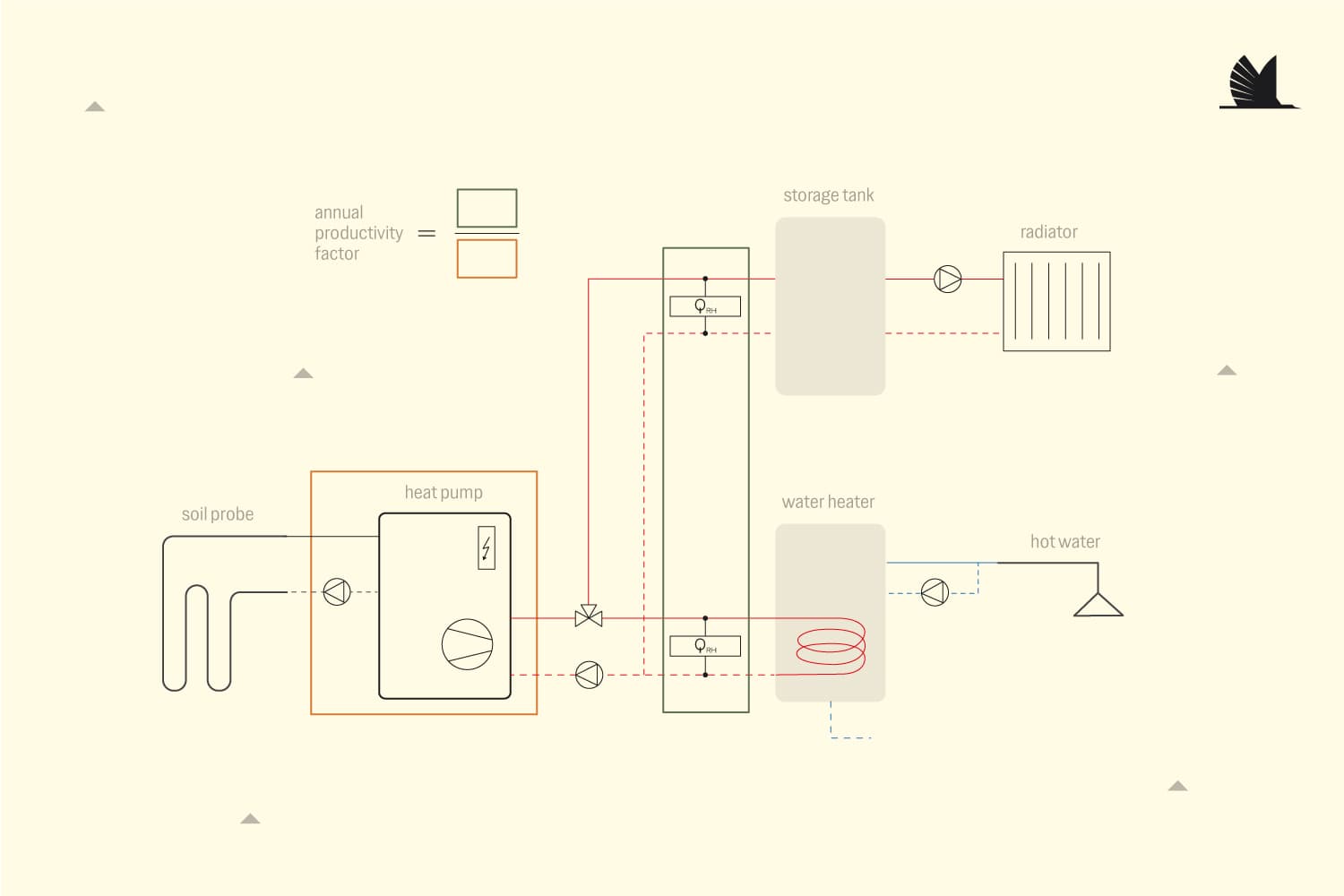
In the current study, the heating circuit temperatures are on average lower than ten years ago, which contributes to a more efficient functioning of the heat pump.
- The houses studied have a lower heat demand, which allows for lower heating circuit temperatures.
- Professional design of engineering networks and high-quality installation make it possible to lower operating temperatures. If you are looking for a reliable provider of heating system design and installation services, contact us today. Hajster offers a combination of comfort and smart modern engineering solutions: 24-hour installation and 24/7 service.
- Another factor in the improvement of annual performance indicators is the improvement of the efficiency of the devices themselves.
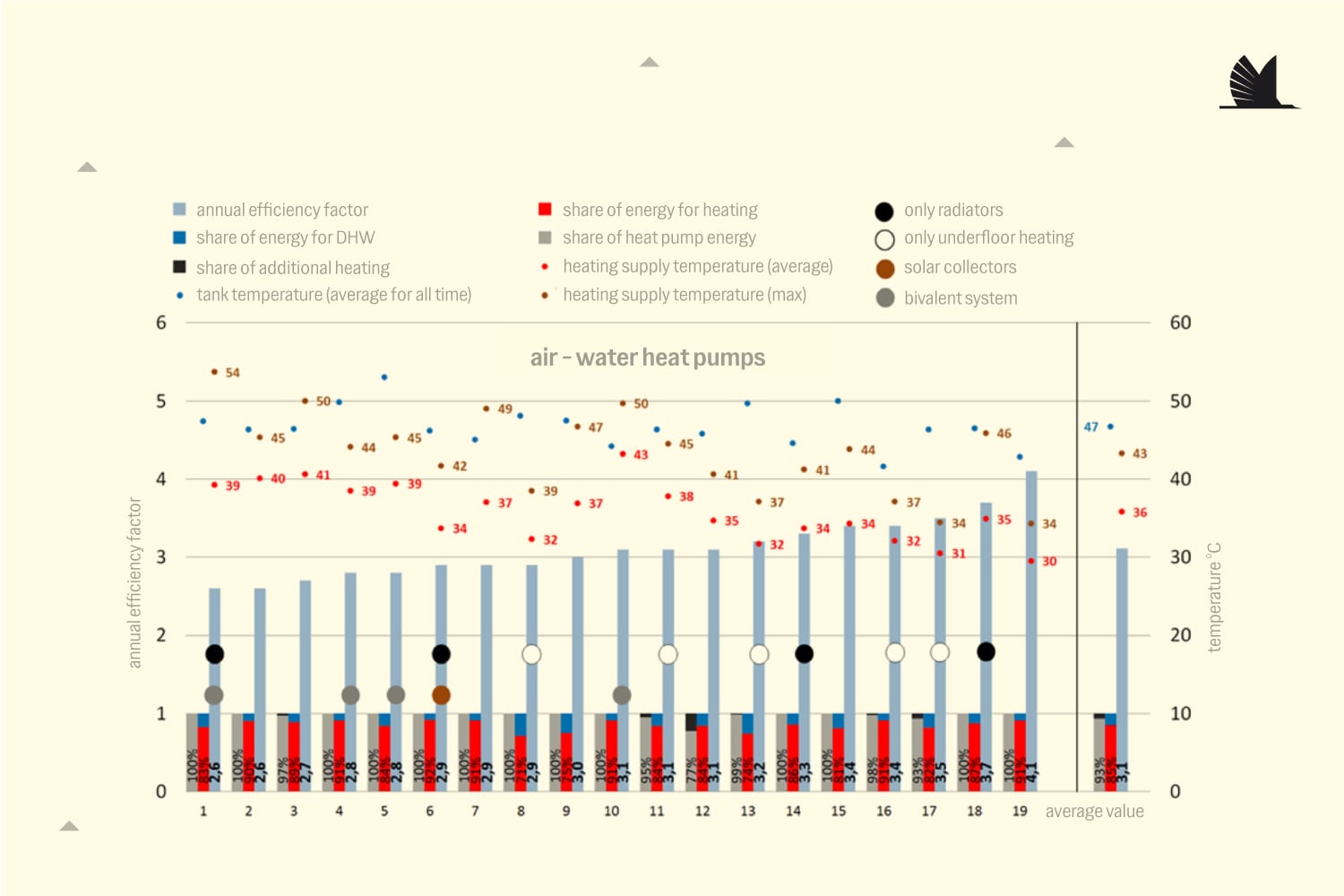
Concise analysis of JAZ results for all heat pumps
The figure shows air-water heat pumps, according to the increase in annual performance. SCOP is in the range of 2.5 to 3.4. The recently upgraded house has reached level 4.1. The average value of all settings is 3.1. We can see a tendency to reach a higher value of SCOP, with a lower temperature in the heating circuit.
The correlation between efficiency and heating circuit temperature is less pronounced for 12 geothermal heat pumps than for air/water heat pumps. We can conclude that the conditions when heat pumps are most efficient depend on many factors. The main advantage of geothermal heat pumps lies in the higher temperature of the heat source, which significantly affects the efficiency of work during the heating season. During the entire measurement period, the temperature of the brine was in the range of 2.8 °С and 5.4 °С.
Measurements have proven that high temperatures of the heating circuit reduce the efficiency of the system. The negative effect on efficiency can clearly be seen in the example of installation #1, where with a maximum flow temperature of 66 °C, the SCOP value was only 1.8.
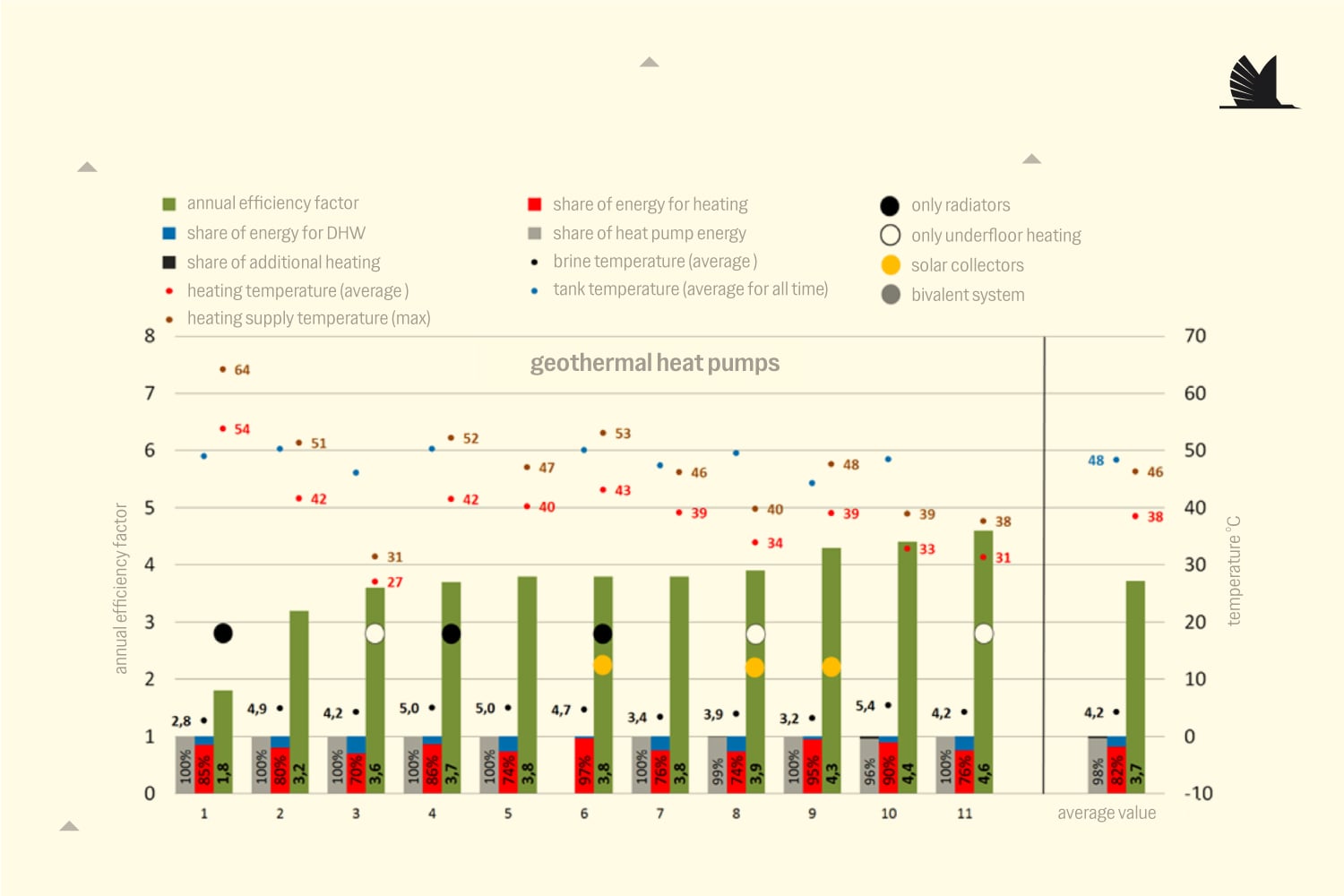
The study showed that the efficiency of heat pumps depends on the proper design of the heating system and the need to use low-temperature heating systems. Surface heating and cooling systems combined with heat pumps are a formula for comfort and low energy costs. So, the performance of a heat pump depends on many factors, including the excellent efficiency of heat pumps in different types of buildings, whether they are old properties in need of renovation or modern new buildings, but in any case, they will help their owners save money and lead an eco-friendly lifestyle.


-1147x627.jpg "Hajster-10")