
HEAT PUMPS / Part 2 - Heat Source

The main requirement for the operation of a heat pump is the availability of an energy source, that is, heat from which to extract and provide the process of boiling the working fluid in the evaporator. Heat pumps are categorized into the following groups based on the type of heat source:
Geothermal: Utilize heat from the ground or underground water.
Air: Utilize heat from the surrounding air.
Additionally, heat pumps that utilize secondary heat from another thermal process, which requires utilization, can be distinguished, such as heat from a technological process or wastewater.
The temperature of the heat source is crucial for the performance and efficiency of the heat pump. Therefore, when choosing the type of equipment, proper design of the entire heating system is essential. Designing is necessary to accurately determine the heat pump capacity and operating temperature ranges. It allows for the calculation of building heat losses and the requirements for heating/cooling and domestic hot water supply.
If you plan to install a geothermal heat pump, in addition to the design of engineering networks, site surveying is necessary to determine the type of soil, its thermal capacity, geological features, and the possibility of installing ground probes or collectors. When using water as a heat source, conducting a chemical analysis of the water is mandatory. All these factors must be considered in the design of heat supply systems based on heat pumps.
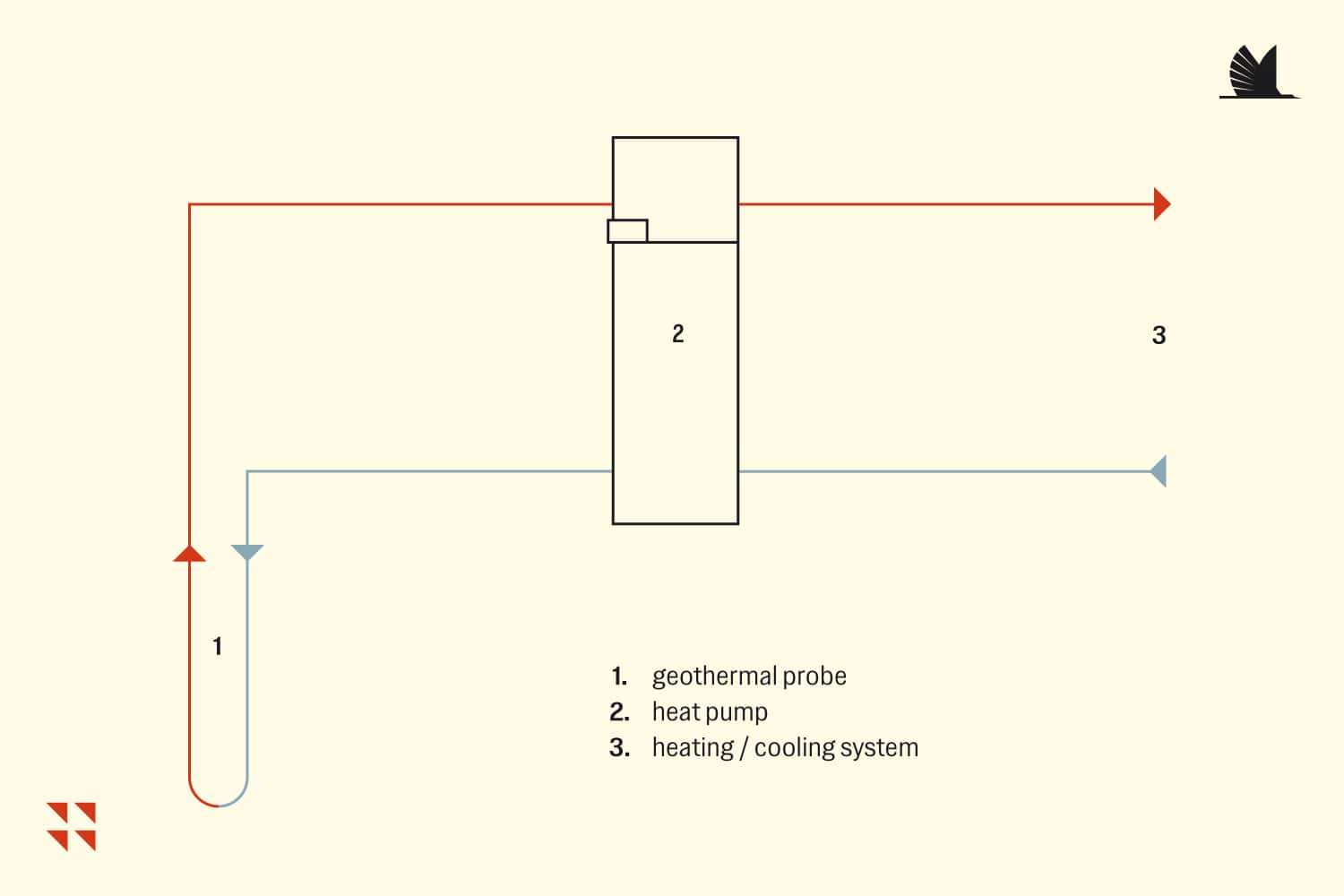
Soil as a Heat Source for Heat Pumps
The soil accumulates solar radiation that reaches its surface and also receives heat from the Earth's core. The soil is characterized by a stable temperature that is nearly independent of weather conditions at a certain depth. At a depth of 5-7 meters, the soil temperature remains relatively constant throughout the year, ranging from 10-12°C.
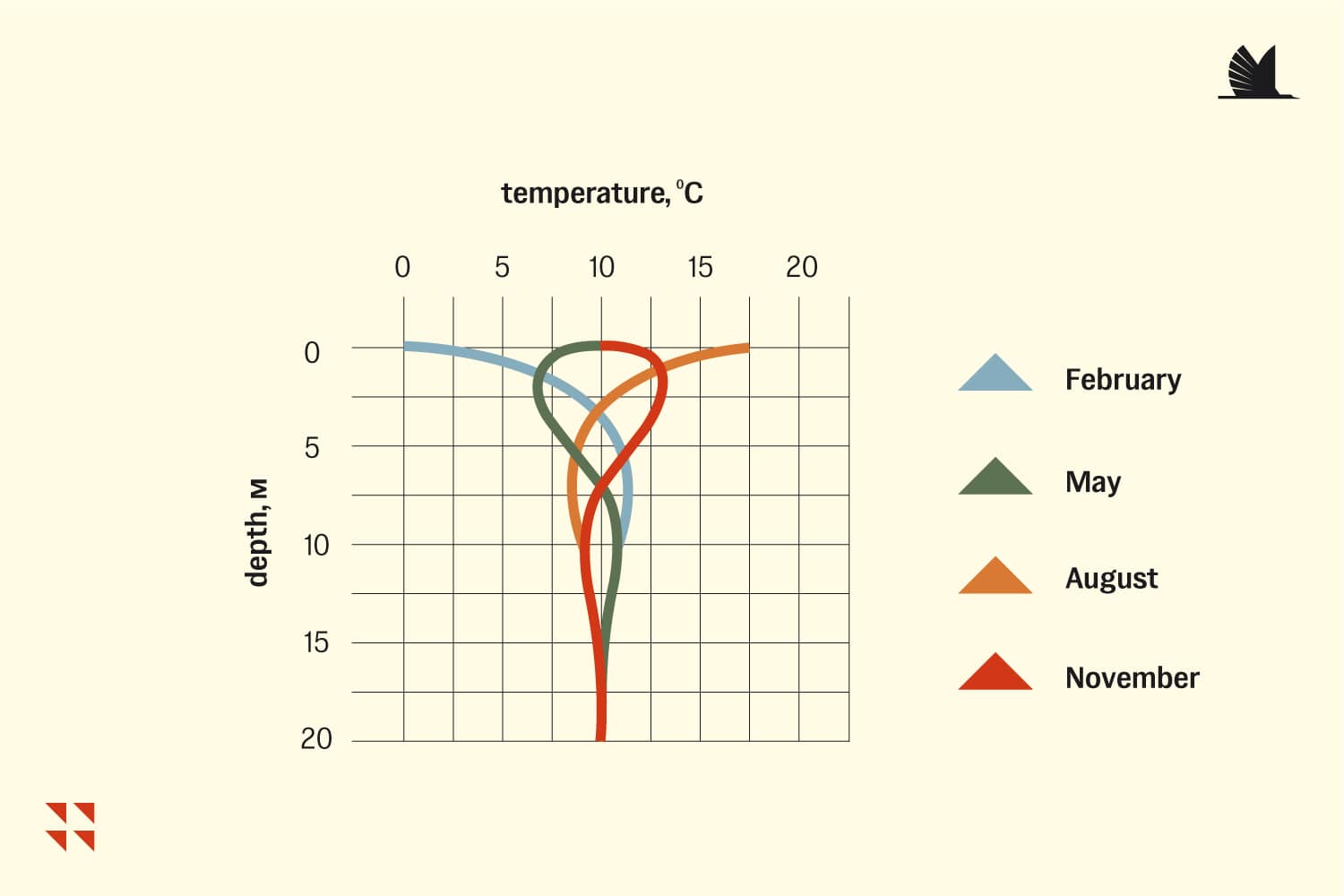
The thermal capacity of the soil is an important factor to consider. The thermal capacity depends on factors such as soil type, geological composition, and moisture content. Higher moisture content allows for greater heat extraction. Wet clay soil tends to have the best thermal characteristics, while soil with a high sand content will significantly reduce the amount of heat that can be extracted.
There are several methods for extracting energy from the ground:
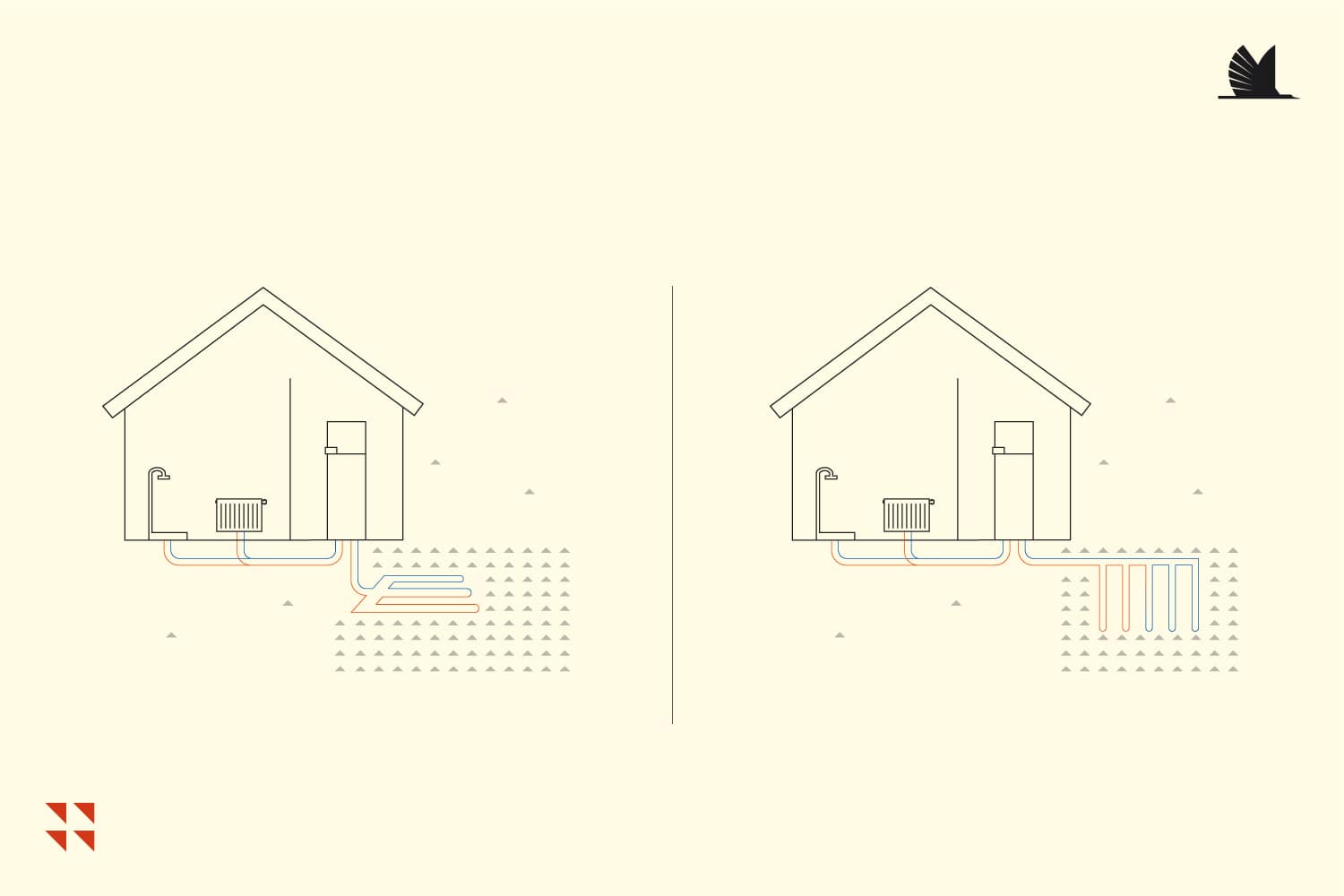
Ground Collector: The primary loop of a geothermal heat pump system can be designed as a ground collector, which is buried at a depth of 1.2 - 1.5 meters. This depth corresponds to the stable temperature throughout the calendar year. The heat transfer from the ground depends on the soil type and typically ranges from 10 to 35 W/m2. It's important to note that installing a ground collector requires a sufficiently large land area.
Vertical Collector: In addition to the horizontal collector, a vertical collector can be used, which occupies less surface area but requires more extensive excavation work, potentially increasing the cost of the geothermal system. One type of vertical collector is the energy baskets, which allow for increased heat extraction per unit area and provide compactness. However, this type of collector is not very popular in Ukraine at the moment.

Each method has its advantages and considerations, and the choice depends on factors such as available land area, geological conditions, and project requirements.
Vertical ground loop
-min.jpg "Hajster-9")
Vertical ground loops are an effective and efficient solution for heat extraction throughout the year. The loops are typically installed at depths ranging from 40 to 120 meters.
For every meter of borehole, heat extraction can range from 30 to 70 watts. The average value of 50 watts is commonly used to calculate the total length of the geothermal loops. Accurate calculations of the number of boreholes and their depths are crucial in the design of a heating system using heat pumps. Insufficient length of the ground loops can result in reduced heat pump performance, freezing of the boreholes, and inadequate heating of the property.
Polyethylene pipes are used to manufacture the loops, which can be either double or quadruple pipes. The pipes have diameters of 25, 32, or 40 mm with varying wall thickness.

When installing geothermal boreholes, special attention should be given to the quality and reliability of the ground loops, as it will be impossible to extract and repair them once they are installed. Ground loops should have a long service life that exceeds the operational period of the heat pump itself. It is recommended to use factory-made loops that come with clear warranty conditions.
Boreholes with ground loops should be filled with a fixing thermal solution that has specified thermal conductivity parameters. Additionally, this solution provides protection for the loops against mechanical damage.
When planning the placement of the boreholes, minimum distances between them should be observed, typically around 5-6 meters. Planting trees with deep root systems in the vicinity of geothermal boreholes is prohibited, as it can cause damage to the loops.
Non-freezing solutions, such as those based on ethylene glycol (with a freezing point of -15ºC), are used as heat carriers for the ground loops. Non-freezing solutions must be environmentally neutral since any accidents or leaks could potentially contaminate groundwater and a significant surrounding area.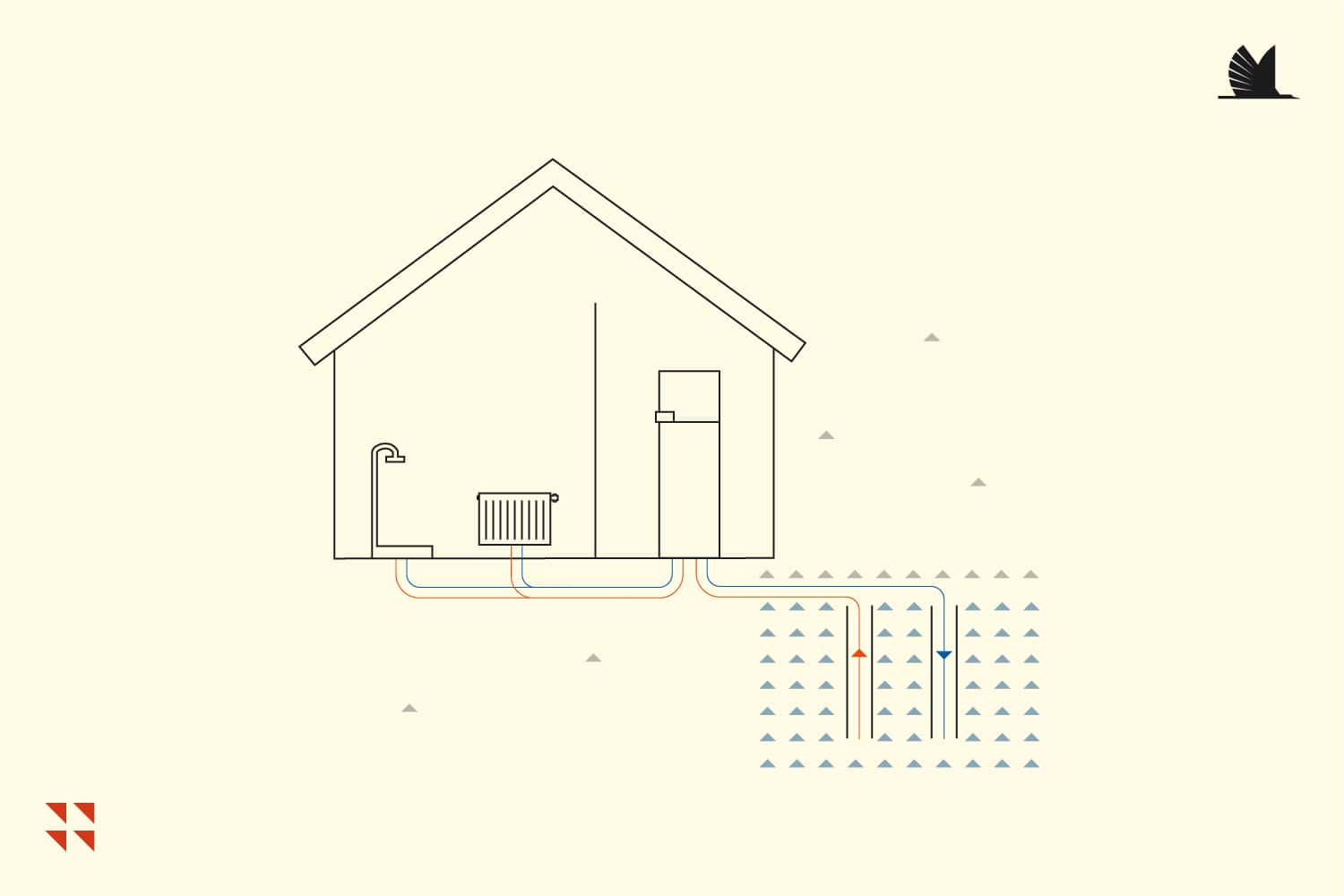
Groundwater is an efficient primary heat source for operating heat pumps. The temperature of groundwater remains stable throughout the year and typically ranges from 7ºC to 12ºC. The energy utilization scheme involving water includes two wells: an "upper" well that supplies water to the water-to-water heat pump's heat exchanger for heat transfer, and a "lower" well that receives the water cooled by the heat pump.
Surface groundwater can also be utilized as a heat source. However, when designing such a scheme, significant temperature fluctuations of the water depending on the season should be taken into account.
A chemical analysis of water is an important element in planning a water-to-water system. In many cases, the water quality does not meet the requirements for direct operation with high-efficiency heat exchangers of heat pumps. In such cases, it is recommended to install an intermediate heat exchanger that corresponds to specific operating conditions and protects the heat pump.
When planning a water-to-water system, it is necessary to conduct geological research of the site to ensure that the volume of water pumped from both wells corresponds to the requirements. To obtain 1 kW of power, it is necessary to pump approximately amount of water from the wells.
The heat source is the ambient air

The use of air as a heat source in heat pumps is economically advantageous as it requires minimal capital expenditure. In such a system, the outdoor unit contains a heat exchanger and a fan that draws air into the evaporator. The evaporator extracts heat from the air, cools it, and then returns the air back to the surrounding environment. Modern technologies allow air-source heat pumps to operate at outdoor temperatures as low as -25ºC.
For operation in low temperatures, air-source heat pumps can be equipped with an additional electric heater or can operate in a system with an auxiliary heat generator, such as a water circuit wood-burning fireplace. By using air-source heat pumps for heating passive and energy-efficient buildings, it is possible to fully meet the heating needs relying solely on these pumps. Even in low outdoor temperatures, such buildings require only a small amount of additional heat.
The monitoring of minimum temperatures during the winter period of 2012/2013 in the city of Kyiv serves as an example that demonstrates the effective operation of air-source heat pumps even during a long and unusually cold period.
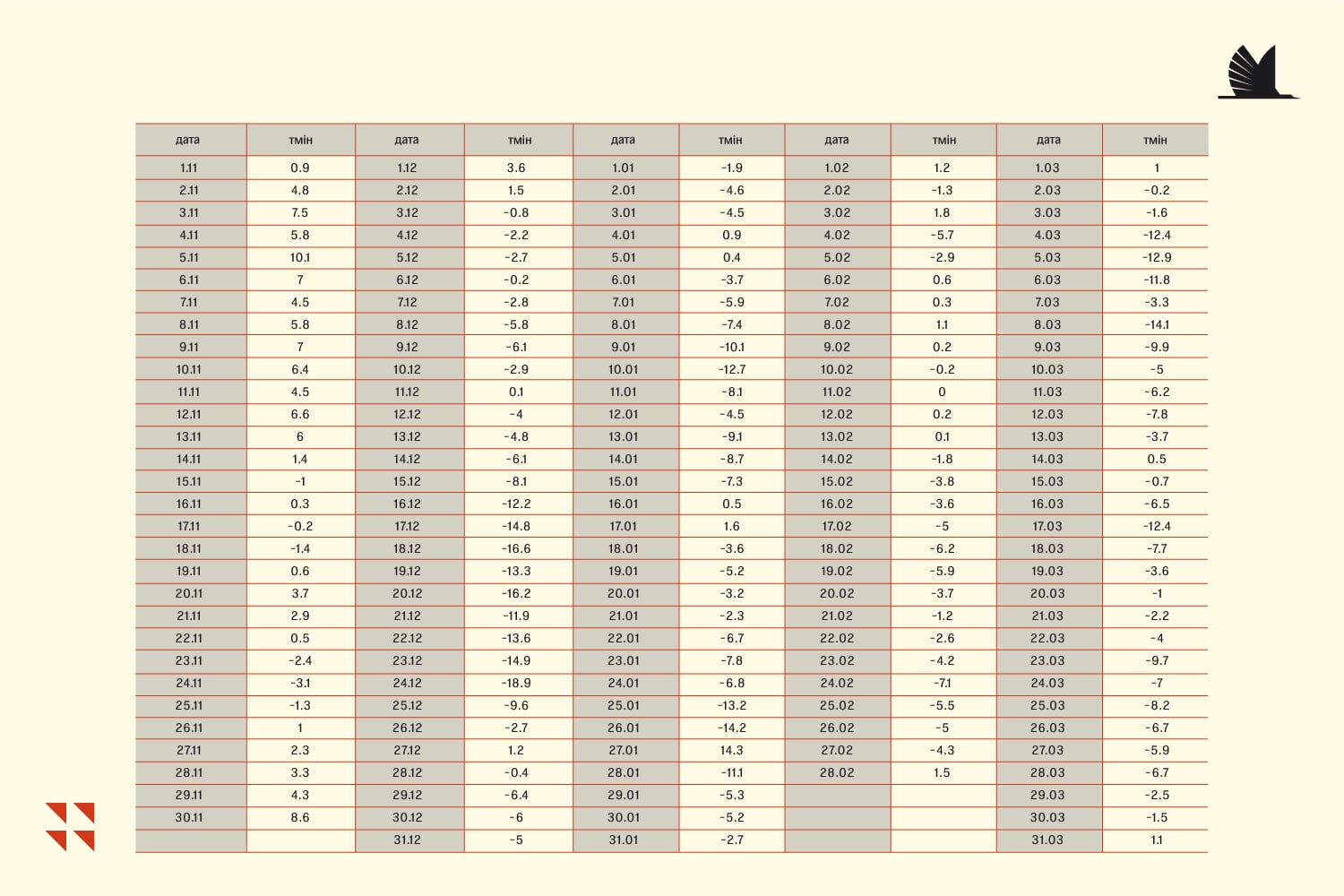
An important factor to consider when planning air-source heat pumps is their sound characteristics. The comfort of living near air-to-water heat pumps will depend on their noise levels.
In recent years, single-unit air-source pumps with a capacity of 8-12 kW have become very popular. They have a simplified design where the refrigeration and hydraulic circuits are located in the outdoor unit, while only the heating system pipelines and a control unit or hydraulic station need to be installed indoors. The main advantages of such pumps are their lower cost, ease of installation, and the absence of the need to work with a refrigeration circuit that uses refrigerants.
The optimal solution for using air-source heat pumps is to operate them in a bivalent mode, which involves combining them with another heat source, such as a gas or pellet boiler, or a wood or pellet fireplace with a water circuit. In this scheme, 70-90% of the heating load can be provided by the air-source heat pump, and the additional heat generator will only be activated in very low temperatures. This allows for efficient heating of the building using the air pump in most weather conditions, with the additional heat source being used only in extreme situations.
The heat source - solar energy + phase transition: water-ice
Utilizing the heat from phase transitions of substances, such as water transitioning into ice or the use of paraffin, is a non-conventional solution for heat pumps. In such systems, the main component is an "ice tank" or "thermal reservoir."
The ice tank typically consists of a large concrete container filled with water. The tank is heated using solar collectors, such as air absorbers or solar thermal collectors, and partially by heat from the ground. A system of pipes is installed around the perimeter of the tank to transfer solar heat to the water inside. This system allows the heated water to be used as a heat source for the heat pump.
Additionally, heat extraction can be achieved using a geothermal collector, typically composed of polyethylene pipes, which is placed inside the tank. This collector enables the utilization of heat accumulated in the ground for further use in the heat pump system.
Utilizing the heat from phase transitions of substances can be an effective solution, but it requires careful system design and calculation. It is crucial to consider the impact of external factors such as solar radiation and ground temperature on the system's efficiency. Proper insulation of the tank and the specific operational characteristics of the heat pump in such a configuration should also be taken into account.

Indeed, heat pumps can utilize various heat sources, including technological processes that involve heat release. This opens up wide possibilities for heat utilization and system efficiency improvement.
One unconventional option is to harness the heat generated during the ice formation process. When water freezes, it releases a certain amount of heat that can be utilized for heating purposes. This process can be employed to create an "ice bank" where water cyclically freezes and thaws. The heat released during freezing can be utilized by a heat pump to heat a building.
Additionally, there are other technological processes that generate heat, which can be harnessed by a heat pump. For instance, wastewater, ventilation air, or heat produced by servers in data centers can serve as heat sources for a heat pump system. In such projects, careful planning is essential, taking into account the characteristics of the heat source and the necessary heat exchangers for optimal utilization of the thermal potential.
Utilizing heat from technological processes is an important direction for the development of heat pumps, opening up new opportunities for energy-efficient heating and cooling. Each project involving non-standard heat sources requires an individual approach, design considerations, and accounting for specific conditions and system requirements.

-1147x627.jpg "Hajster-16")
-1147x627.jpg "Hajster-17")