
Heat pumps + surface heating and cooling systems

Heat pumps are becoming increasingly popular for creating a comfortable indoor climate. Combination of heat pumps and low-temperature heating and cooling systems will be a key factor in the efficiency of such mixed projects.
The use of surface heating and cooling systems, such as underfloor heating, warm or cold walls, and ceiling panels, is particularly important. This approach can reduce the temperature of the coolant by 1°C and at the same time increase the coefficient of performance (COP) by 2.5%. Underfloor heating is particularly effective because it provides comfort through heat radiation, which reduces the overall room temperature. Studies show that underfloor heating can reduce comfort temperatures by 2°C compared to radiator heating, and every 1°C reduction in room temperature results in 6% energy savings.
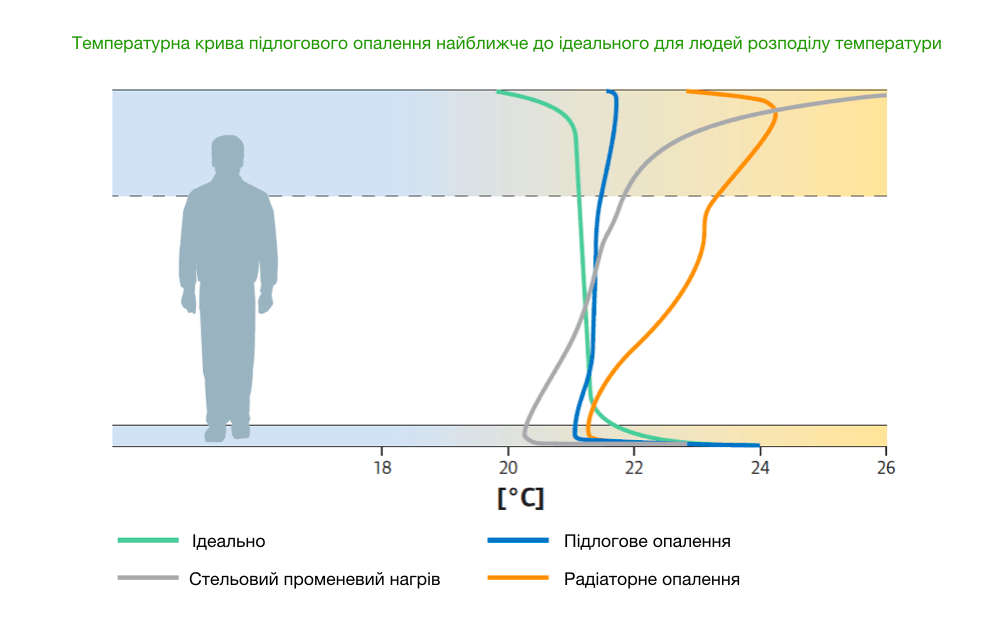
Surface cooling systems have several significant advantages compared to conventional convection-based systems. In traditional cooling systems, cold air only affects the room temperature without influencing the surface temperature. Even after the cooling is turned off, surfaces continue to radiate heat. Moreover, if the circulating air in the air conditioning system has a low temperature, its relative humidity will also be low. This can result in a feeling of dryness and cold in the air, as well as dryness of the mucous membranes. Stronger convection currents can create discomfort.
In surface cooling systems, the low temperature of the surfaces allows for heat exchange through radiation, reducing heat exchange through evaporation. Optimal heat exchange is achieved when there is an 8°C temperature difference between the surfaces and the human body. When air comes into contact with cold surfaces, it cools down, creating a weak convection airflow that does not cause discomfort.
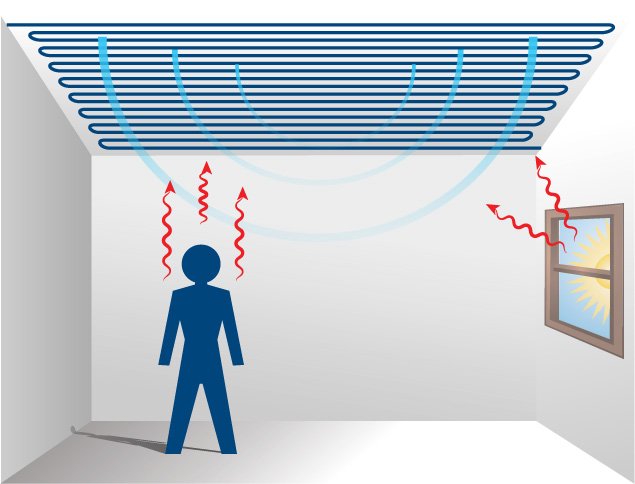
One of the highly efficient solutions in modern construction is the use of Thermally Activated Building Systems (TABS) in conjunction with heat pumps. TABS involves transforming the building structure itself into a system that provides heating or cooling, essentially turning the building into a thermal accumulator. During the construction phase, polyethylene pipes are embedded in the concrete slabs of the building (and if needed, in the walls) to facilitate heating and cooling throughout the house. The primary goal of the engineering design in such projects is to maintain the optimal temperature of the building structure.
TABS systems have low energy consumption during the winter period and minimal cooling costs during the summer while meeting all the requirements for maximum comfort. Numerous studies predict an increase in energy demand for cooling buildings in European countries. All newly constructed office and administrative buildings are equipped with air conditioning systems, and a significant volume of retrofitting is also expected for existing buildings. With the increasing frequency of hot periods during summer, energy expenses for cooling/air conditioning systems that provide a comfortable indoor climate will also rise. Thermally activated building systems can be used simultaneously for heating and cooling purposes and can serve as an efficient alternative to both traditional heating and cooling systems and air-based installations.
Combining TABS with geothermal heat pumps is particularly effective. In such cases, passive cooling systems can be utilized. By leveraging the geothermal field (ground probes, energy wells), the cooling system can directly utilize the ground temperature (around 8-10 degrees Celsius).

In this case, regarding operational costs, only the electricity required for the operation of circulation pumps needs to be taken into account. Thanks to TABS systems, cooling costs for buildings are reduced by 90% compared to traditional convection systems. Every year, numerous new projects emerge where Earth's energy is used to provide a microclimate for facilities.
One such realized project is the Ministry of Urban Development and Environment building in Hamburg, Germany. The total area of the building is 60,089 m². This administrative complex serves as an example of energy efficiency and sustainable ecological development. In July 2014, the building received a gold certificate from the German Sustainable Building Council (DGNB). The distinctive features of this facility include low primary energy consumption of approximately 60 kWh/m² per year, achieved through a highly compact structure, excellent thermal insulation, and a solar shading system with optimal facade transparency. The building's heating is provided by 1600 energy piles in combination with heat pumps and backup heating from the local district heating plant. The boiler room is equipped with two brine-water heat pumps with a total capacity of 650 kW.


The heating/cooling system in this facility is based on the use of Thermally Activated Building Systems (TABS). This system is combined with the concept of mixed-mode ventilation, which includes the possibility of nighttime cooling through ventilation dampers on the facade, as well as heating and cooling through the use of thermally active ceilings. Additionally, the ventilation system efficiently recovers heat, ensuring maximum comfort indoors with minimal energy consumption.
-1147x627.jpg "Hajster-11")

-1147x627.jpg "Hajster-13")